Hiển thị các bài đăng có nhãn manly. Hiển thị tất cả bài đăng

Thứ Ba, 10 tháng 4, 2012

Lessons in Manliness from Dante


Editor’s note: This is a guest post from Andrew Ratelle.

    “I see man’s mind cannot be satisfied
    unless it be illumined by that truth
    beyond which there exists no other truth.”

    - Paradiso IV.124-126.

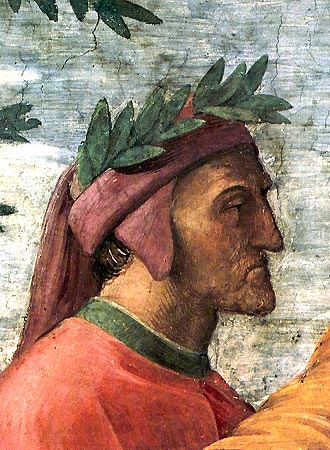
Auguste Rodin’s famous sculpture, The Thinker, is probably the single most well-known depiction of the poet Dante. Originally entitled The Poet itself, the statue has since become as much of an icon of the strength of the human intellect as the man who first inspired it. Crouched in life as in Rodin’s bronze over some of the greatest problems life has to offer, Dante remains one of history’s foremost thinkers, a visionary who places man at the center of his own epic journey between good and evil.

Born in Florence to a noble family in 1265, Dante Alighieri was a man whose life was shaped by conflict. After the defeat of the Ghibellines, the rival political power in Florence, Dante’s own party, the Guelphs, split in half and turned on itself for control of the city. Having made a name for himself as a statesman and “man of letters,” Dante was sent on an ambassadorial mission to Rome to help treat for peace. Detained there by Pope Boniface VIII while his political enemies seized control of the city, Dante was fined and eventually banished from Florence for his opposition to the new ruling party. He would never again return home. For the next twenty years, Dante lived as an exile until his death in 1321, during which time he penned one of history’s greatest epics.

A poetic journey through the flames of hell, purgatory, and heaven, the Divine Comedy takes place on a truly massive scale. Encompassing the entire breadth of man’s moral actions, it has resonated with each passing generation for the last seven hundred years, never ceasing to inspire readers of every walk of life with its immortal themes of sin, suffering, and redemption. Along with its author, the Comedy has long been a touchstone of the Western intellectual tradition, ensuring an enduring legacy for those who would seek to learn from the life and work of “the central man of all the world.”[i]
Lessons in Manliness from Dante

    “Nobility, a mantle quick to shrink!
    Unless we add to it from day to day,
    time with its shears will trim off more and more.”

    - Paradiso XVI. 7-9.

Never underestimate the power of a well-rounded mind. Some two hundred years before Leonardo da Vinci and Galileo etched into tradition the archetype of the multi-talented Florentine, Dante had already taken the stage as a kind of “pre-Renaissance Renaissance man.” Though his renown stems chiefly from his abilities as a poet and writer, Dante maintained an enormous appetite for learning throughout his life.

The arts of war, politics, philosophy, linguistics, music, painting, and the natural sciences were all pursuits he engaged with the same discipline and intensity, completely immersing himself in a chosen subject for its own sake. Diverse though they were, much of Dante’s success lay in his ability to incorporate his many interests into the service of his larger work, creating a piece of literature that is at once an achievement in subject, style, language, and visual artistry.

The Divine Comedy is in many ways the first poem of its kind, an epic written not in the classical Greek or Latin, but the vernacular of the common people. To achieve this, Dante essentially standardized the language we now know as modern Italian, applying his abilities as a linguist to synthesize the varying dialects that stretched across medieval Italy into a single, cohesive whole. Likewise woven through the Comedy are many of Dante’s other scholarly interests, now conveyed to a new and broader audience through his skill with language. Set to an almost musical tempo, the Comedy’s narrative moves the reader through a vision of the afterlife that rivals the imagery of any artist, while taking on the world of politics, history, and even the metaphysical nature of the earth itself.

Breadth of study is no hindrance to a mind that can harness its resources toward a singular goal, bringing to bear the weight of one’s discipline and experience on the subject at hand.

    “…for sitting softly cushioned,
    or tucked in bed, is no way to win fame;
    and without it man must waste his life away,
    leaving such traces of what he was on earth
    as smoke in wind and foam upon the water.
    Stand up! Dominate this weariness of yours
    with the strength of soul that wins in every battle
    if it does not sink beneath the body’s weight.”

    - Inferno XXIV.46-51

Learn as much from experience as you do from books. To borrow a line from Mark Twain, Dante may have studied much, but he never allowed it to get in the way of his education. Scholarly work was an essential element to his intellectual formation, but he was far from letting it be the only one.

Not content with simply playing the part of the studious observer, Dante approached life with the same vigor he applied to his studies. He was, as he later remarks in the Inferno, as much of a glutton for knowledge as he was for experience. In his youth, he fought with sword and spear against the Ghibellines as a feditore, or heavy cavalryman, on the front lines of the Florentine army at the Battle of Campaldino and later at the Siege of Caprona. Six years later, he began a career in public life, serving on councils and in debates before eventually being elected to the office of Prior for the city of Florence. During his time in exile, Dante traveled extensively, often attending meetings and delegations to try to restore peace between the factions of the Guelph party and then returning home.
But it was far from a bed of roses. Dante’s intensity as an intellectual was likely the result of the fact that he experienced much of the darker side of life. By the time he began the Comedy, Dante was a man whom life had chewed up and spat back out. Hardened by war, conflict, betrayal, and the burden of exile, Dante had seen firsthand the coarseness of the world, and it left an indelible mark on him and his work. Gleaning as much from the rawness of life as from his subjects of study, Dante allowed his mind and poetic imagination to be shaped not just by the good or easy things in life, but also by its bitterness, truly making him a man who could reflect on the world as a man of the world.

    “How hard it is to tell what it was like,
    this wood of wilderness, savage and stubborn
    (the thought of it brings back all my old fears),
    a bitter place! Death could scarce be bitterer.
    But if I would show the good that came of it
    I must talk about things other than the good.”

    - Inferno I.4-9

Accept the consequences of your own moral vision. Moral courage can take many different forms. At times, it may require a man to defend the principles he lives by, or even to do the right thing regardless of the consequences. At others, it could mean something a little more basic.

Justice was much more than a nice idea in Dante’s mind. It was real, the standard of a higher moral order that bound the actions of all men. Right and wrong weren’t just arbitrary designations, but degrees of talking about the inherent value of human behavior. His life in politics and exile had shown Dante the face of corruption and treachery, and knew that the perpetrators of both and many more ills rarely received any punishment for their deeds. But that did not mean they shouldn’t be held accountable for what they did.

The standard that evil is to be punished and good rewarded is written into the very fabric of the Divine Comedy, and it’s a standard Dante uses to measure the deeds of all men, even his own. Moral judgments require courage, because in so judging, a man must hold himself and his own actions to the very same standard. The vision that allows one to see evil for what it really is also illuminates his own rights and wrongs. For Dante, a journey through hell, purgatory, and heaven isn’t just a matter of looking into the fate of other people, but a way of viewing oneself, facing up to both one’s strengths and weaknesses as they really appear.

    “You have the light that shows you right from wrong,
    and your Free Will, which, though it may grow faint
    in its first struggles with the heavens, can still
    surmount all obstacles if nurtured well.
    You are free subjects of a greater power,
    a nobler nature that creates your mind…
    So, if the world today has gone astray,
    the cause lies in yourselves and only there!”

    - Purgatorio XVI.76-83

At the end of the day, a man lives the life he chooses. Simplicity can matter as much as any level of depth or richness when it comes to creating a great work of literature. For all its timelessness and complexity, the Divine Comedy has a singular message at its core–how man, “subject to the justice of punishment or reward,” either “gains or loses merit by the exercise of his free will.”[ii]

Dante knew that men rarely live how they want, but they will always live as they choose. Though circumstance may often decide many things in one’s life, it cannot ultimately effect the control a man has over the direction he takes. Fortune may work for good or ill upon the path he walks, but it will always be the path he chooses to walk, just as it will always be his choice to move forward or to turn back.

In Dante’s mind, man was the ultimate custodian of his own fate. He alone was responsible for the outcome of his life from beginning to end, and it was he that had to accept the consequences of his choices. With all earthly distinction faded away, the characters in Dante’s Comedy are seen solely in the light of the decisions they made in life. Their lot was their choice, as it is every man’s. Placed within a moral realm ordered not by human laws, but by an inherent standard of justice, one’s merit in life lies squarely in his own hands, to rise or fall as he so chooses. For by virtue of his freedom of will, a man’s ultimate fate is his to decide and his alone.

    “Expect no longer words or signs from me.
     Now is your will upright, wholesome and free,
     and not to heed its pleasure would be wrong:
     I crown and miter you lord of yourself!”

    - Purgatorio XXVII.139-142

Further Reading

Probably the most readable biography of Dante is R.W.B. Lewis’ Dante: A Life.  For a more detailed bio, check out Barbara Reynolds’ Dante: The Poet, the Political Thinker, the Man.

For the Divine Comedy, The Portable Dante contains Mark Musa’s translation of both the Comedy and Vita Nuova, one of the poet’s minor works.  Also worth looking into is Dorothy Sayers’ translation of the Comedy, which is available in three separate volumes: Hell, Purgatory, and Paradise. Allen Mandelbaum’s translation can be found online at The World of Dante, a website that also contains a collection of images, maps, and biographical information.

Danteworlds at the University of Texas at Austin is probably the best “sparknotes” version of the Comedy you can find online, while The Princeton Dante Project and Columbia University’s Digital Dante Project provide a more in-depth look at Dante’s life and writings.

[i] John Ruskin. Stones of Venice, vol. III, sec. lxvii.

[ii] Dante Alighieri. Letter to Can Grande Della Scala.

Willpower Part I: The Force of Greatness


What are your regrets from last year?

Failing to stick with an exercise program?

Losing a girlfriend because you strayed?

Failing a class?

Hurting a loved one with your temper?

What resolutions have you made for the new year?

Losing 20 pounds?

Getting up earlier in the morning?

Reining in your spending?

Wasting less time mindlessly surfing the internet?

Regrets and resolutions. What do they have in common? Willpower. A lack of and a need for.

But what is willpower anyway? You’ve heard the term before, but it probably seems like an awfully abstract force. You might feel as those it’s something innate, and that some men were born with a larger portion of it than others. It’s something you likely wish you had more of yourself, but don’t have any idea of how to go about it.

Happily, the truth is that willpower is a very real energy–a power source that can be depleted, strengthened, and conserved. And the man who learns how to tap into this fuel and harness his willpower gains some of the most vital knowledge one can possess: how to make of himself and his life anything he wants them to be.
The History of Willpower

    “Self-control is self-mastery. It is kingship over all life. At the center of your being sits yourself. Your seat ought to be a throne. If you are not in control, if there are any forces in your nature that are unruly, that do not acknowledge your sway, you are not the king you should be. Part of your kingdom is in insurrection. The strength of your life is divided. The strong man is he whose whole being is subject to him.” -James Russell Miller, The Beauty of Self-Control, 1911

Like many great truths, the nature and importance of willpower was understood by our forbearers, lost in time, and then rediscovered and refined by modern science.

A focus on willpower originated in the 19th century, around the time of the Industrial Revolution. As people observed the way in which steam could be harnessed and turned into productive energy, their thoughts turned to contemplating the great feats the human machine might be capable of by channeling a different kind of fuel source: willpower.  In a time when a successful life was measured by the pursuit of character and virtue, a man’s “strength of will” or “moral resistance” was seen as the most vital quality for achieving those ends. Regardless of the temptations he was beset with, a man of iron-clad self-control never veered from his purpose and code of honor.  As the captain of his fate, he steered his own course, come what may. No accomplishment in position or wealth could be measured next to the greatest conquest of all…mastery of one’s self.

This celebration of willpower was weakened by the Progressive movement of the early 20th century, which focused on people’s external environment as opposed to their personal qualities as determining their fate. Poverty and crime could be traced to a person’s deficient upbringing and squalid surroundings, progressives argued, not their lack of self-control.

During World War II the term picked up some negative baggage from the release of the Nazi propaganda film, Triumph of the Will. And in post-war America, willpower was relegated to the background by the rising consumer culture—after all, self-control is bad for business. The hippies of the 1960s heralded the maxim of “if it feels good, do it” as a guiding principle for life. And the philosophy of self-help gurus like Norman Vincent Peale and Napoleon Hill, who emphasized positive thinking as the way to success, remained popular throughout the 20th century.

In the present time, this year has seen the release of a bevy of books that question how much free will and agency we really have after all. Psychologists and philosophers point to research and studies to argue that humans are highly irrational beings whose behaviors are largely controlled by their unconscious minds.

Yet at the same time, other psychologists have been launching a revival of interest in the concept of willpower and demonstrating in studies that not only does it constitute a real and enormously vital energy, but that one’s belief in it need not involve invariably blaming the victim for their misfortunes (an understanding of willpower can illuminate just how external factors effect the downtrodden), nor put you in the ranks of the cruel goose stepper (having strong self-control is linked to greater levels of empathy and altruism, not less).
The Importance of Willpower

    “That majestic endowment [the Will] constitutes the high privilege granted to each man apparently to test how much the man will make of himself. It is clothed with powers which will enable him to obtain the greatest of all possessions — self-possession. Self-possession implies the capacity for self-restraint, self-compulsion and self-direction; and he who has these, if he live long enough, can have any other possession that he wants.” -William Hanna Thompson, Brain and Personality, 1906

Psychologists have always been keen to find the personal characteristics that correlate to positive life outcomes. While they’ve turned over hundreds of rocks in this search, they’ve only found two factors that consistently lead people to greater levels of happiness, health, and success: willpower and intelligence.

Unfortunately, researchers have yet to discover ways of increasing a person’s intelligence in the long-term; it is an aptitude that is largely genetic and innate.

So when it comes to bettering our lives, that leaves willpower as the only tool within our control.

But what a powerful tool it is.

By now you’ve probably heard about the oft-cited marshmallow experiment in which four-year-old children were left alone in a room with a marshmallow in front of them. The children were told they could eat the marshmallow right away, or wait 15 minutes to receive an additional marshmallow. The children with the highest self-control, those who were able to wait in order to double their white gelatinous booty—grew up to become fitter adults who got better test scores and grades and enjoyed healthier relationships.

In another study which examined 36 different personality traits of a group of children, only one, willpower, later correlated to their college GPA. In fact the correlation between willpower and college GPA was stronger than that between future grades and IQ or SAT scores.

Other studies have shown that people with higher levels of self-control are more emotionally stable and struggle less with anger, anxiety, depression, and drug and alcohol abuse. They also make more popular bosses, have more friends, and are more likely to be in a stable marriage and less likely to get divorced. And all of these benefits hold true even when the results are controlled for things like class, race, and intelligence. The same outcomes were also found when siblings who were raised in the same household were studied. The siblings with more self-control fared better in life than their willpower-lacking brothers and sisters.

    “The strength of your life is measured by the strength of your will.”—Henry Van Dyke

It is easy to see why such a high correlation between your level of willpower and how far you reach in life exists. All success, happiness, and satisfaction are achieved by minimizing your screw ups and maximizing your positive decisions and habits. And the energy that drives your ability to produce both outcomes is willpower. The man with more willpower takes five steps forward and one step back, while the man with less willpower takes two steps forward and then one step back. Thus, it is not an overstatement to describe willpower as the absolute linchpin quality in determining the outcome of your life—whether you’ll be superhuman or ordinary, king or slave, man or mouse.
Understanding Willpower

    “A better definition of the Will, therefore, is ‘the Power Of Self-direction.’”

    “The Will may be now [defined] as a power to choose what the man shall do.”

    “THE WILL IS THE MAN.”

    -Frank Hadding Chaddock, The Power of Will, 1919

Okay, so the strength of your willpower is incredibly important. But to return to the question posed in the introduction…what exactly is willpower anyway?

Essentially, it is a mental energy that allows you to direct your actions in four categories of behavior:

    Thoughts. Don’t think about a white bear! You just thought about a white bear, didn’t you? Willpower helps you focus on what you want to think about, by keeping unwelcome and intrusive thoughts at bay.
    Emotions. You can’t will yourself to feel happy or sad. But you can decide to take actions to change how you’re feeling—“I feel down. I’m going to go for a run—that always lifts my spirits.” And when you put up a front and fake an emotion, like being the rock for someone else when you feel like falling apart yourself, that takes willpower too.
    Impulses. Impulses are things like: “I want to eat that piece of cake.” “I want to punch that guy.” “I want to check my email instead of working.” While there are ways to minimize the number of impulses like this you get, you don’t have direct control over whether they pop into your head. But willpower does help you regulate how you react to the impulse. Will you ignore it or give in?
    Performance control. This deals with how well you can focus and concentrate on a task, how long you stick with something before giving up, how much effort you expend during different phases of an exercise or task, how well you manage your time, etc.

While willpower regulates all these different categories of potential and actual actions, it’s the same supply of willpower that deals with all of them—you don’t have one willpower supply for emotions and one for performance control.

Basically, whenever you have a desire to do something that conflicts with your long-term goals and your core values, willpower is the thing that kicks in and tries to keep you on track. The stronger your willpower is, the better chance of making a decision in line with your goals. Willpower is what allows you to choose your path and to persevere in that path despite obstacles, resistance, and weakness.

While it’s true that our unconscious minds lead us to make choices and behave in ways we are not always aware of and that are not always rational, the sway of the unconscious is greater when it comes to our short-term decisions. Willpower acts as an executive force that looks for patterns and sees the connection between our present behavior and our long-term goals, and then makes course corrections to keep us heading in the right direction. Or in other words, willpower is the skipper of our ship; despite wind and waves that push the ship around, the skipper constantly consults his compass and adjusts the rudder so we stay on course.

I find it useful to imagine willpower in the context of the old image of the devil and the angel sitting on each of your shoulders, but sans the religious imagery. Instead of an angel, imagine Teddy Roosevelt on one side, and Al Bundy on the other. TR’s saying to you, “Bully! Read that textbook!” while Al is whispering in your ear to grab a beer and plop in front of the television. Who will win? Well that depends on TR’s strength relative to Al at any given moment. What determines that strength? A phenomenon called “ego depletion.”

And that’s what we’ll explore next week in the second part of this three part series, when we discuss the finite nature of our willpower supply. Then we’ll finish up with an article on how to strengthen, and even more importantly, how to conserve your willpower for the most important things in your life.

Manvotional: The Thousandth Man


The Thousandth Man
By Rudyard Kipling


One man in a thousand, Solomon says,
Will stick more close than a brother.
And it’s worth while seeking him half your days
If you find him before the other.
Nine hundred and ninety-nine depend
On what the world sees in you,
But the Thousandth Man will stand your friend
With the whole round world agin you.

‘Tis neither promise nor prayer nor show
Will settle the finding for ‘ee.
Nine hundred and ninety-nine of ‘em go
By your looks or your acts or your glory.
But if he finds you and you find him,
The rest of the world don’t matter;
For the Thousandth Man will sink or swim
With you in any water.

You can use his purse with no more talk
Than he uses yours for his spendings,
And laugh and meet in your daily walk
As though there had been no lendings.
Nine hundred and ninety-nine of ‘em call
For silver and gold in their dealings;
But the Thousandth Man he’s worth ‘em all,
Because you can show him your feelings.

His wrong’s your wrong, and his right’s your right,
In season or out of season.
Stand up and back it in all men’s sight—
With that for your only reason!
Nine hundred and ninety-nine can’t bide
The shame or mocking or laughter,
But the Thousandth Man will stand by your side
To the gallows-foot—and after!

Thứ Hai, 9 tháng 4, 2012

Freedom From…Freedom To


There are two kinds of freedom. Freedom from (negative freedom) and freedom to (positive freedom). The splitting of freedom into this binary framework can be traced at least back to Kant, was articulated by Erich Fromm in his 1941 work, Escape from Freedom, made famous by Isaiah Berlin’s 1958 essay, “Two Concepts of Liberty,” and explored more modernly by Charles Taylor.

These philosophers and thinkers generally used these two different categories of freedom to discuss and debate the role of government in citizens’ lives. But today we’d like to take a stab at exploring the way in which thinking about the difference between freedom from and freedom to can help us understand more about our personal development and the journey from boy to man.
Understanding the Difference Between Negative and Positive Freedom

Negative Freedom/Freedom From

Negative freedom is freedom from external interference that prevents you from doing what you want, when you want to do it. These restrictions are placed on you by other people. The more negative freedom you have, the less obstacles that exist between you and doing whatever it is you desire.

Charles Taylor calls negative freedom an “opportunity concept” of freedom because it gives you access to a range of desirable opportunities, regardless of whether you decide to take advantage of those opportunities or not.

The concept of negative freedom can be summed up as: “I am a slave to no man.”

Positive Freedom/Freedom To

Positive freedom is the freedom to control and direct one’s own life. Positive freedom allows a man to consciously make his own choices, create his own purpose, and shape his own life; he acts instead of being acted upon.

Taylor calls positive freedom an “exercise concept” of freedom because it involves discriminating between all possible opportunities, and exercising the options that are most in line with your real will and what you truly want in life.

The concept of positive freedom can be summed up as: “I am my own master.”

If the difference between negative and positive freedom still seems fuzzy in your head, the Stanford Encyclopedia of Philosophy offers an excellent analogy to explain the nature of the two concepts.

Imagine a man driving a car. He comes to a crossroads. There is no traffic light, no police roadblock, and no other cars; the driver is free to turn whichever way he wants to, and he decides to turn left. This is negative freedom; the driver is free from restrictions which force him to go one way or the other. But what if the driver turned left because he needed to stop at a convenience store to get cigarettes, and he stopped even though it would mean missing an important appointment? It was his addiction that was really steering the car. This shows a lack of positive freedom; the driver lacked the freedom to do what he really wanted—to get to the appointment on time.

As the Stanford Encyclopedia of Philosophy explains:

    This story gives us two contrasting ways of thinking of liberty. On the one hand, one can think of liberty as the absence of obstacles external to the agent. You are free if no one is stopping you from doing whatever you might want to do. In the above story you appear, in this sense, to be free. On the other hand, one can think of liberty as the presence of control on the part of the agent. To be free, you must be self-determined, which is to say that you must be able to control your own destiny in your own interests. In the above story you appear, in this sense, to be unfree: you are not in control of your own destiny, as you are failing to control a passion that you yourself would rather be rid of and which is preventing you from realizing what you recognize to be your true interests. One might say that while on the first view liberty is simply about how many doors are open to the agent, on the second view it is more about going through the right doors for the right reasons.

Applying the Concepts of Negative and Positive Freedom to a Man’s Life

Enlarge Image

Stage 1: Childhood. Low negative freedom. Low positive freedom.
                                 
When you are a child, you are deficient in both negative and positive freedom. Your parents impose your schedule and the rules you must live by. Your possible choices are constrained, and your beliefs and goals often come from your parents. You also lack self-mastery; you have poor impulse-control and are afraid of a good many things.

Stage 2: Young Adulthood. High negative freedom. Low positive freedom.
                          
Then one day you turn 18, graduate from high school, and perhaps leave home and go off to college. For the first time in your life, there’s nobody looking over your shoulder telling you what to do. The external authority in your life is gone, and, especially in an Age of Anomie where there really aren’t any cultural rules anymore, you can do pretty much anything you’d like (short of violating the law). Party every night, sleep in to noon every day, skip class on a whim, bring whoever you’d like back to your place…

You’re awash in negative freedom—you have tons of opportunities, numerous doors to open. This is a pretty intoxicating feeling, and at first you revel in it, testing it out by pushing towards the old boundaries just to prove to yourself that they aren’t there. Strengthening your self-discipline and self-control is not a priority.

Note: Of course, freedom to do what you want doesn’t mean you’re free from the repercussions of those choices; you can still go broke and flunk out of school. You can choose your actions, but you can’t choose the consequences of those actions.


Stage 3: Emerging Adulthood. High negative freedom. Increasing positive freedom.

At a certain point, you begin to realize that while an infinite number of opportunities are open to you, not every opportunity is equal in importance. You go from thinking, “I can do whatever I want!” to “What do I really want out of life?” You begin to seek for greater meaning and to discover your life’s purpose. You find a higher level of desires for your life.

As your mindset changes, you start to discriminate between all the options open to you, deciding that some are more significant than others—those that lead to the fulfillment of your higher desires. As you examine the different doors before you, you notice that those that front your lower desires all swing open freely, and lead into a single room, while the doors that lead to your higher desires open to a staircase that takes you up a level to another hallway with a new set of doors. You also realize that some of the doors to your higher desires are locked.  These locks represent internal obstacles keeping you from attaining what you really want in life. For example:

    You want to get married, but your shyness prevents you from talking to women.
    You want to graduate college, but your lack of discipline keeps you from studying and making passing grades.
    You want to complete an Ironman, but you’re fat and out of shape.
    You want to be financially independent, but you can’t control your spending.
    You want to live the tenets of your new faith, but you keep backsliding into old habits.
    You want to keep a job, but you can’t stop drinking and showing up hungover.
    You want to become a Congressman, but you have a fear of public speaking.
    You want to become a man, but you don’t know what that means.

You realize you have plenty of negative freedom–you’re free from external restrictions–but you don’t have much positive freedom, the ability to overcome fear, ignorance, and bad habits and traits in order to become the man you want to be.

Stage 4: Manhood. High negative freedom. High positive freedom
.

While people are no longer imposing external restrictions on you, you decide that in order to become the man you want to be, you will have to come up with your own rules for yourself and set your own limits. You willingly work on developing your self-control, self-discipline, and willpower. In so doing, you gain the ability to control your lower desires in order to fulfill your higher desires. For example, the driver in the story above quits smoking, so that his addiction no longer controls his decisions.

Philosophers like Kant would say that these self-imposed restrictions do not decrease your overall negative freedom, because you have created the laws yourself, of your own free will and choice, and no man can enslave himself. Your negative freedom can only be constrained by others, who coerce you to do things contrary to your will. By learning to control and harness your desires, you actually become more autonomous. You’re not only free from external restrictions, but you are no longer a slave to your passions. You not only have the freedom of standing in a hallway of an infinite number of doors, you also have the freedom to step through any of them. Self-mastery is the master key that opens all doors.
The Pursuit of Positive Freedom and the Path to Manhood

Unfortunately, a lot of guys get stuck in Stage 2. They grow up in a culture that emphasizes negative freedom as the end all, be all of life; happiness=being able to do whatever you’d like. So they never make the transition from thinking about freedom from, to thinking about freedom to. But that transition is a big part of going from boy to man.

Men who shift from thinking exclusively about negative freedom to thinking about positive freedom as well discover that the restrictions they place on themselves do not limit their negative freedom–while their self-discipline does close off some possibilities, it opens new ones only available to those who have the positive freedom to grasp them. Almost any man can get a job; only a man with positive freedom can get his dream job. Almost any man can become a husband and a father; only a man with positive freedom can become a good husband and a good father.

On the other hand, men who do not mature past a singular focus on freedom from, see all restrictions, whether imposed by others or imposed by self, as limits on their negative freedom. If they discover that something they want is behind a locked door, instead of working on overcoming that inner obstacle, they shrug their shoulders and decide that they didn’t really want it anyway. For this reason, men who get stuck in Stage 2 make less progress in life and never reach the highest levels of “self-actualization,” superhuman-ness if you will.

Freedom from-dwellers also end up being restless and dissatisfied with their lives. Feeling in control of your life creates happiness and satisfaction, and feeling in control comes from gaining positive freedom from self-mastery. A man with positive freedom makes a strong connection between his purpose, what he has to give up to obtain that purpose, and the fact that he does so willingly. He understands the law of sacrifice, and takes ownership of and responsibility for his choices.

Finally, the advantage of cultivating a rich wellspring of positive freedom is that while a man’s negative freedom can be taken away by others, his reserve of positive freedom is an untouchable power source that can sustain him no matter how his external conditions change or what dire circumstances befall him.

This is precisely what psychiatrist Viktor Emil Frankl observed when he lived among his fellow prisoners–men who had been stripped of every vestige of their negative freedom–at the Nazis’ Theresienstadt concentration camp. As Frankl recounts in his famous book, Man’s Search for Meaning:

    In spite of all the enforced physical and mental primitiveness of the life in a concentration camp, it was possible for spiritual life to deepen. Sensitive people who were used to a rich intellectual life may have suffered much pain (they were often of a delicate constitution), but the damage to their inner selves was less. They were able to retreat from their terrible surroundings to a life of inner riches and spiritual freedom. Only in this way can one explain the apparent paradox that some prisoners of a less hardy makeup often seemed to survive camp life better than did those of a robust nature…

    The experiences of camp life show that man does have a choice of action. There were enough examples, often of a heroic nature, which proved that apathy could be overcome, irritability suppressed. Man can preserve a vestige of spiritual freedom, of independence of mind, even in such terrible conditions of psychic and physical stress.

    We who lived, in concentration camps can remember the men who walked through the huts comforting others, giving away their last piece of bread. They may have been few in number, but they offer sufficient proof that everything can be taken from a man but one thing: the last of the human freedoms — to choose one’s attitude in any given set of circumstances, to choose one’s own way.

16 Manly Last Words


We’ve always been intrigued by the last words of others. What did a person use his final mortal breaths to utter? What were they thinking about? Were they scared as they glimpsed the great beyond? Or did they brace up and stoically give up the ghost?

The following 16 men looked death in the eye and embraced whatever came next.

The 80-year-old Corey was accused of witchcraft during the 1692 Salem trials, but he refused to enter a plea to the court. As punishment, he was laid naked in a pit in a field, and slowly pressed to death over two days. Heavy rocks were gradually placed upon his chest--but he refused to cry out in pain, or enter a plea, and each time he was asked to do so, he simply replied: "More weight."

During the War of 1812, Lawrence's ship, the USS Chesapeake engaged in battle with the Royal Navy's HMS Shannon. The captain was mortally wounded with small arms fire, but encouraged his men to keep up the fight. His orders became a popular Naval battle cry.

These were Childers' last words to his firing squad before he was executed in 1922 during the Irish Civil War.

Thomas More was tried and executed for treason in 1535 because he wouldn't support King Henry VIII's marriage annulment and denied that the king was the head of the Church. Before being beheaded, he said his last words in reference to his beard. He positioned his beard on the executioner's block so that it wouldn't be harmed while he was beheaded.

On the 800-mile return trip of Robert Falcon Scott's unsuccessful attempt to be the first to reach the South Pole, his team desperately slogged through freezing temperatures and blizzards, trying to stay on schedule and reach the supply depots along the way. Oates' feet were badly frostbitten, and he was slowing down the rest of the men. He volunteered to be left behind, but his comrades refused to leave him. So finally he simply walked outside his tent and into a blizzard, telling the others, "I am just going outside. I may be some time."

Hartley and his fellow band members continued to play as the Titanic sunk, in order to keep the passengers and crew calm. When the last lifeboats had been loaded, the musicians grabbed the railing on top the Grand Staircase's deckhouse, and Hartley said this farewell to them just before a wave hit and washed him overboard.

Patton died in 1945, right before leaving Europe. He was in a car accident en route to a hunting excursion that left him paralyzed from the neck down. He lingered in a hospital in spinal traction for 12 days; twas not the kind of glorious death the lifetime soldier had imagined for himself.

Passionate about the idea of manned flight, Otto Lilienthal was known as the "Glider King" and made over 2,000 flights in glider models he designed himself. In 1896, his glider stalled, and he fell 56 ft, critically fracturing his spine. These were his last words to his brother before he succumbed to the injury.